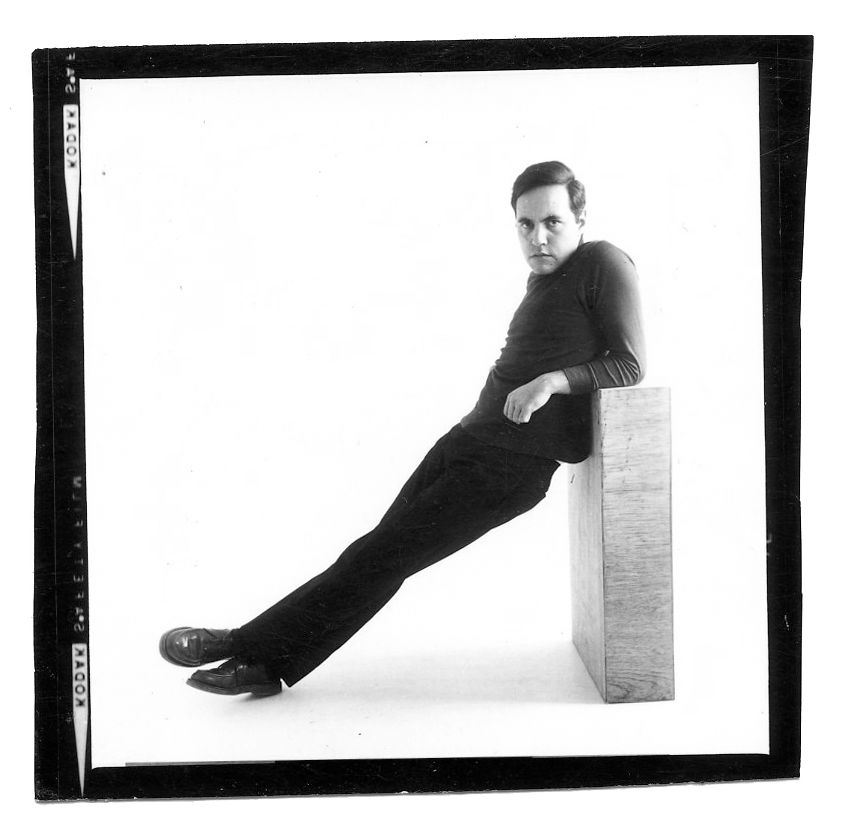
Bogotá, Colombia, 1939 – Subachoque, Colombia, 2007
Bernardo Salcedo was a pioneering figure in Colombian conceptual art and one of the most influential artists in the transformation of the country’s artistic landscape during the second half of the twentieth century. Known for his irreverent spirit, sharp wit, and critical approach to established conventions, Salcedo developed a distinctive body of work that challenged traditional definitions of art and expanded the possibilities of artistic expression.
Born in Bogotá in 1939, Salcedo studied architecture and sociology at the National University of Colombia. His artistic practice emerged in the 1960s, during a period of profound cultural and political transformation in Latin America. Rather than pursuing conventional painting or sculpture, he turned to assemblage, found objects, installation, and language as means of exploring the relationship between art, society, and systems of representation.
Drawing on influences ranging from Dadaism and Surrealism to Pop Art and Conceptualism, Salcedo developed a highly personal visual language rooted in the transformation of ordinary materials. Boxes, discarded objects, photographs, fragments of text, and everyday artifacts became vehicles for questioning cultural assumptions, institutional authority, and the construction of meaning. Humor, irony, and ambiguity were central to his practice, allowing seemingly simple gestures to reveal complex social and philosophical tensions.
Among his most significant works is Hectárea de heno (Hectare of Hay, 1970), presented at the Second Coltejer Art Biennial in Medellín and widely regarded as one of the earliest examples of installation art in Colombia. Another landmark work, Primera lección (First Lesson, 1973), dismantled the symbolism of the Colombian national coat of arms through a series of textual statements, exposing the contradictions between national ideals and political realities.
Throughout his career, Salcedo resisted rigid artistic classifications. His work moved fluidly between object-making, conceptual propositions, visual poetry, and institutional critique, consistently challenging the boundaries separating art from everyday life. His celebrated box assemblages, begun in the 1960s, became one of the most recognizable expressions of his practice, transforming modest, often discarded materials into intricate spaces of visual and conceptual association.
Salcedo’s work was presented in numerous exhibitions in Colombia and internationally, including the 23rd São Paulo Biennial in 1994. Major retrospective exhibitions include El universo en caja (The Universe in a Box), organized by the Banco de la República in Bogotá in 2001, and Cómo hacer cosas con palabras (How to Do Things with Words), presented at the Museo de Arte Moderno de Medellín in 2016–2017.
Beyond his artistic production, Salcedo was an outspoken and often provocative voice within Colombia’s cultural landscape. His independence of thought and refusal to conform to prevailing artistic expectations established him as a singular figure among the generation of artists who redefined Colombian art in the 1960s and 1970s.
Today, Bernardo Salcedo is recognized as a foundational figure in the development of conceptual practices in Colombia. His work continues to invite reflection on the unstable relationships between objects, language, identity, and meaning, remaining as incisive, playful, and relevant as when it was first conceived.